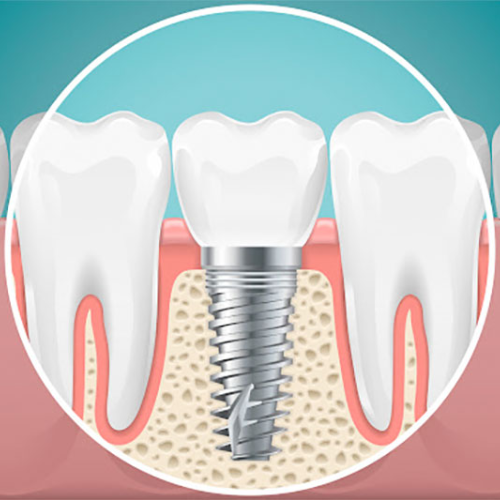
Repair bone loss caused by dental implants in Panama with Guided Bone Regeneration (GBR). Our expert procedures ensure a solid foundation. Schedule your appointment with us.
Sobre el servicio
Implantes y prótesis · Guided bone regeneration in Panama
GUIDED BONE REGENERATION Guided Bone Regeneration (GBR) is a surgical technique that enables us to repair bone defects by creating a greater volume of bone in areas where there is some bone deformity or defect following a dental extraction. The objective of Bone Regeneration is to create the appropriate support for the placement of dental implants. The process of Bone Regeneration begins with osteogenesis, which stimulates the formation of new bone-forming cells from the bone graft. The placement of a membrane or mesh serves as a barrier at the site of the bone defect to protect and stimulate the growth of new bone. The barrier membrane prevents non-bone cells from invading the area, allowing bone cells to regenerate the lost bone. New bone will form in approximately 4 to 6 months after the bone graft. WHAT MATERIALS DO WE USE FOR GUIDED BONE REGENERATION? Depending on the origin of the biomaterial to be used, we can classify it into three groups: AUTOLOGOUS GRAFT This is when bone from the patient's own body is used. ALLOGRAFT In this type of graft, the bone comes from another person, so we are dealing with a graft that will be genetically different. In most of these cases, the graft comes from donors who may belong to blood and tissue banks. XENOGRAFT This type of bone graft comes from another animal species (usually bovine) and contains all the minerals of a human bone. CASES OF GUIDED BONE REGENERATION Imagen 1: Emergence profile prior to implant restoration Imagen 2: Post-scan to initiate implant crown restoration using Digital Flow Imagen 3: Crown restoration on implant En algunos casos, sí: cuando el defecto es pequeño y el hueso existente sostiene el implante con firmeza, se colocan ambos a la vez. Si la pérdida de hueso es mayor, primero se regenera y el implante se coloca en una segunda cirugía. La tomografía define qué opción es segura. El hueso que rodea al diente se mantiene por los estímulos de la masticación. Al extraerlo, esa zona deja de recibir carga y se reabsorbe, sobre todo en los primeros meses. Las infecciones y la enfermedad periodontal también destruyen hueso. Por eso muchas veces se necesita regenerar antes de un implante. Es un procedimiento frecuente y predecible, pero como toda cirugía puede tener inflamación, moretones, infección o exposición de la membrana si la herida se abre. Fumar y no seguir las indicaciones aumentan esos riesgos. El especialista revisa la cicatrización en controles para actuar a tiempo. Sí, pero hay que planificar, porque el proceso tiene varias fases y el hueso necesita meses para madurar antes del implante. Lo ideal es enviar tu tomografía con anticipación para evaluar el caso y organizar los viajes. Escríbenos por WhatsApp al 6311-3112 y coordinamos las fechas contigo.Preguntas frecuentes
¿Se puede colocar el implante en la misma cirugía de la regeneración ósea?
¿Por qué se pierde hueso después de sacar un diente?
¿Qué riesgos tiene la regeneración ósea guiada?
¿Puedo viajar a Panamá para hacerme una regeneración ósea?